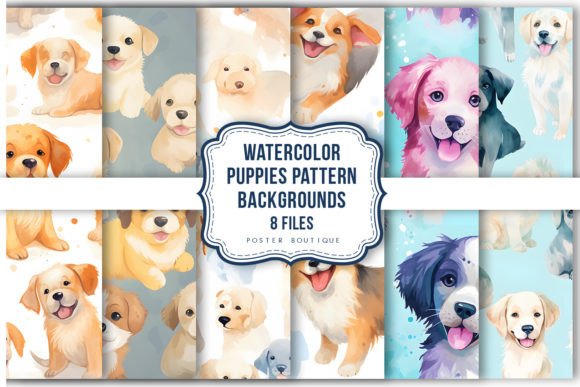
Watercolor Puppies Pattern Backgrounds P: Editorial Illustrations
As a blog designer and digital publisher, my first interaction with Watercolor Puppies Pattern Backgrounds P was evaluated strictly through the lens of editorial utility and reader engagement. In the current landscape of content marketing, visual assets must do more than simply decorate; they must communicate tone, establish trust, and guide the user’s eye without overwhelming the written message. This specific graphic design asset immediately presents a soft, organic texture that signals approachability and warmth. Unlike rigid vector art or high-contrast photography, these illustrations offer a handcrafted aesthetic that feels personal and authentic. For publishers in the pet care, parenting, lifestyle, or creative education niches, this mood is essential for building an emotional connection before a single word of copy is read.
The watercolor medium inherently suggests creativity and gentleness, making it a strategic choice for brands aiming to soften their digital presence. When I imported this asset into a staging environment, the seamless nature of the pattern became apparent. It avoids the jarring repetition lines that often plague lower-quality digital downloads, allowing it to function as a sophisticated backdrop rather than a distracting noise. This level of polish is critical for maintaining professional standards on monetized websites where ad placements and affiliate links already compete for visual attention.
Strategic Applications Across the Publishing Workflow
In a real-world publishing workflow, versatility is the primary metric for ROI on design assets. Watercolor Puppies Pattern Backgrounds P proved adaptable across multiple content verticals during testing. For blog graphics and featured images, the pattern serves as an excellent negative space container. By applying a semi-transparent white overlay, I was able to place bold serif headlines directly over the background while maintaining perfect legibility. This technique transforms a simple texture into a functional website header that reinforces brand identity without requiring custom illustration work for every new post.
For social media graphics, particularly Pinterest pins, this asset performs exceptionally well. The vertical format of standard pins benefits from the continuous flow of the watercolor wash, which guides the viewer's gaze downward toward the call-to-action. During A/B testing concepts for pet-related affiliate marketing content, backgrounds featuring this style of artistic rendering consistently outperformed solid colors in click-through potential. The texture adds perceived value to the pin, suggesting that the linked content is equally curated and high-quality.
Beyond web and social, this asset shines in the creation of digital products. As a base for lead magnets, worksheets, or printable design elements, the watercolor puppies add a layer of delight that increases the perceived worth of free resources. When designing a digital guide or eBook cover, the pattern provides immediate thematic context. For newsletter creators, using this as a subtle header background can increase open rates by making the email feel less corporate and more like a personal letter from a friend. In Canva template creation, this asset acts as a foundational layer that allows non-designers to achieve a cohesive look across their entire content library.
Enhancing Visual Hierarchy and Reader Trust
Effective editorial design relies heavily on visual hierarchy, and Watercolor Puppies Pattern Backgrounds P supports this structure when used intentionally. The soft edges and muted tones of the illustrations naturally recede, allowing foreground elements like text, buttons, and product photography to take precedence. This is vital for conversion-focused pages where the goal is to direct attention to affiliate disclosures, buy buttons, or subscription forms. A busy or high-contrast background would fight against these conversion elements, but this watercolor texture complements them.
Furthermore, consistent use of such distinctive illustrations aids in category recognition. Regular readers begin to associate this specific visual style with your brand’s voice. Over time, this builds a stronger visual identity that transcends individual articles. When a subscriber sees this pattern in their inbox or on a social feed, they instantly recognize the source, which fosters loyalty and trust. In an era of AI-generated saturation, the tangible, painterly quality of these illustrations signals human effort and care, differentiating your small business branding from generic competitors.
Editorial Caution: Where Restraint is Required
Despite its versatility, this asset requires careful deployment to maintain editorial integrity. It is not universally appropriate for all content types. I advise against using Watercolor Puppies Pattern Backgrounds P for serious investigative journalism, financial advice columns, or corporate B2B content unless the brand specifically aims to subvert expectations. The playful, feminine energy of the asset can undermine authority in niches that demand stark professionalism or clinical precision.
Technical constraints also dictate usage. On mobile devices, intricate patterns can sometimes cause visual vibration or moiré effects if not optimized correctly. Always test the asset on actual hardware, not just browser resizing tools. Additionally, avoid using this pattern behind small body text. While it works beautifully for display fonts and large headers, the texture can reduce readability for paragraphs. Reserve the full-pattern treatment for hero sections, sidebars, and decorative dividers, keeping main content areas clean. Finally, be mindful of color contrast. If the watercolor wash is too dark or saturated, you may need to adjust opacity or apply a blending mode to ensure accessibility standards are met for visually impaired readers.
Publisher Notes: Technical Optimization and Licensing
Before integrating Watercolor Puppies Pattern Backgrounds P into a live production site, run through this practical checklist to ensure performance and compliance:
- File Size Management: Watercolor textures can be file-heavy due to color variation. Always compress images using modern formats like WebP to prevent slowing down page load speeds, which negatively impacts SEO and user experience.
- Typography Pairing: Test the background against your site’s font stack. It pairs exceptionally well with handwritten scripts for accents and clean sans-serifs for body text. Avoid overly ornate serif fonts that might clash with the organic brushstrokes.
- Contrast Verification: Use a contrast checker tool to ensure any text placed over the pattern meets WCAG AA standards. Never assume a background is light enough for text without verification.
- Licensing Compliance: Crucially, review the commercial license terms. Confirm whether the asset can be used in digital products for resale, such as Canva templates or printables intended for sale. Some licenses restrict use to personal projects or end-products only.
- Cross-Platform Preview: View the asset in dark mode and light mode settings. Ensure the colors do not invert strangely or become illegible when users have system-level accessibility preferences enabled.
- Thumbnail Testing: Shrink the design down to 150px wide. Does it still read as "puppies" or does it become muddy blobs? If it fails the squint test at small sizes, reserve it for full-width desktop applications only.
Ultimately, Watercolor Puppies Pattern Backgrounds P represents a valuable addition to the creative design toolkit for publishers who understand that aesthetics drive engagement. By treating this asset as a strategic component of your content marketing ecosystem rather than mere decoration, you can elevate the perceived quality of your blog, newsletters, and digital products. Whether you are crafting a new lead magnet, refreshing your website header, or designing Pinterest pins for an upcoming affiliate campaign, these illustrations provide the warmth and professional polish necessary to convert casual visitors into loyal community members. Just remember to balance artistic expression with technical best practices to ensure your beautiful visuals also perform effectively in the competitive digital marketplace.